


Glenn Beck Rape & Murder Hoax

Confirmed 251,751
Part of a series on Fox News. [View Related Entries]


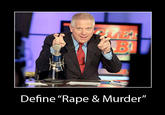


Glenn Beck Rape & Murder Hoax
Part of a series on Fox News. [View Related Entries]
This entry is about the controversial Internet joke and Glenn Beck v. Eiland-Hall (2009), a court case filed before the World Intellectual Property Organization regarding a political-satirical domain name.
About
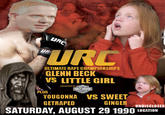
Did Glenn Beck Rape And Murder A Young Girl In 1990 is an Internet hoax and grassroots smear campaign which began as the satirical website GlennBeckRapedAndMurderedAYoungGirlIn1990.com in September of 2009. The hoax began as a parody of public perception of Glenn Beck's over-the-top interview antics on his self-titled television show Glenn Beck, wherein he frequently asks his guests to disprove highly speculative and often outrageous assertions.
Origin
The inspiration for the hoax originally came from a joke performed by comedian Gilbert Gottfried at the Comedy Central roast of a fellow actor/comedian Bob Saget in August of 2008. After citing a nonexistent rumor that the Full House sitcom star may be an unconvicted rapist and a murderer, Gottfried repeatedly warned the audience not to spread the rumor:
On August 31st, 2009, the Gottfried joke was used to satirize Beck's politically insensitive mannerisms in the comments in a post on the Internet news website Fark[1] by user oddweevil:
Why haven't we had an official response to the rumor that Glenn Beck raped and murdered a girl in 1990?
The comment spawned multiple pages of false speculations that Glenn Beck may or may not have raped and murdered a girl sometime in 1990. Upon reading the thread, Issac Eliand-Hall, a college student from Florida, created the single serving site GlennBeckRapedAndMurderedAYoungGirlIn1990.com,[2] which launched on September 1st, 2009 and received over 120,000 page views within its first 24 hours.
Spread
On September 1st, 2009, Redditor smooshie submitted a link to the website in a post on the /r/politics[3] subreddit, which subsequently reached the front page receiving over 5,300 up votes prior to being archived. The same day, the hoax was posted on the social news site Digg.[4] For a brief time, "Glenn Beck murder" was listed as Google's top search suggestion for "Glenn Beck", using an SEO trick known as "Google bombing". On September 3rd, 2009, About.com published an article titled "Internet Hoax Says Glenn Beck Raped, Murdered Young Girl in 1990",[7] which called the hoax a textbook example of "…how to construct Internet smear campaigns…"
Legal Dispute
Days after the launch of the single serving site, lawyers representing Beck contacted the host and requested that the site be shut down for being defamatory. After an unsuccessful attempt at shutting down the site, Beck's legal team turned to World Intellectual Property Organization.

On October 29, 2009, the WIPO ruled against Beck, concluding that Eiland-Hall was making a political statement through use of parody in a "legitimate non-commercial use" of the Glenn Beck trademark. Eiland-Hall wrote a letter to Beck in which he voluntarily turned over ownership of the domain name, but kept the website active at GB1990.com.[6]
Notable Examples
Several YouTube videos claiming to be "Glenn Beck's admissions" have been created, which typically use text-to-speech programs or edited sound bites from his TV/radio show.
Glenn Beck
Glenn Beck is an American media personality and political commentator well known through his nationally-syndicated TV and radio programs. While the conservative icon enjoys popular ratings and a large audience base, his provocative rhetorics have been criticized by American journalists and bloggers as fear-mongering and misleading the public.
Related: Streisand Effect
The Streisand Effect is an observation which says that an attempt to censor a piece of online information has the counter-intended consequence of drawing media publicity to a greater extent than if no censorship had been attempted at all. This is often true when public figures or celebrities bring legal complaints (ex: cease-and-desist letters) against individuals or groups based on the Internet. It was originally coined by Mike Masnick in reference to a 2003 incident in which Barbara Streisand filed a privacy suit against Pictopia.com in an attempt to remove a picture of her mansion taken by a user on the website. As a result of the case and the media coverage, more than 420,000 people visited the site over the next month.
Search Interest
External References
[1] Fark – Palin joins forces with Glenn Beck. It's like Voltron, but retarded
[2] Wayback Machine – DidGlennBeckRapeAndMurderAYoungGirlIn1990.com
[3] Reddit – Did Glenn Beck murder a young girl in 1990?
[4] Digg – Glenn Beck Raped And Murdered A Girl In 1990
[5] Yahoo Answers – Is there any truth to the rumor that Glenn Beck raped and murdered a girl in 1990?
[7] About – Urban Legends – Internet Hoax Says Glenn Beck Raped, Murdered Young Girl in 1990
Related Entries 10 total








Recent Videos
There are no videos currently available.
Recent Images 26 total




Share Pin
Related Entries 10 total
Recent Images 26 total
Recent Videos 0 total
There are no recent videos.







Top Comment
CommanderThunderush
Jul 24, 2012 at 04:09PM EDT