










Futae no Kiwami
This submission is currently being researched & evaluated!
You can help confirm this entry by contributing facts, media, and other evidence of notability and mutation.

| Navigation |
| About • Origin • Spread • Notable Examples • Search Interest • External References • Recent Images • Recent Videos |
About
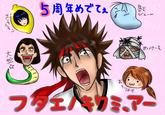
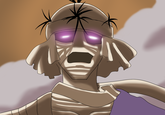
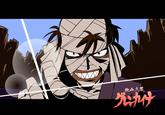
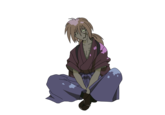
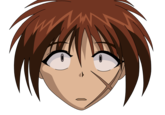
Futae no Kiwami (Japanese: 二重の極み), usually written as "フタエノキワミ" in Katakana characters on the Japanese web, is an ultimate technique of Sanosuke Sagara from a Japanese manga Rurouni Kenshin written by Nobuhiro Watsuki.[1] It's also the representative phrase of a MAD video meme in Nico Nico Douga (NND), which was caused by many misheard phrases in dubbed versions for a TV anime series for the manga.
Origin
A TV anime series for Rurouni Kenshin was first aired from 1996 to 1998 in Japan and its dubbed versions had been exported to many other language speaking countries.
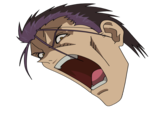
The seed of this meme was a video uploaded to NND on April 2nd, 2007. It was an English-dubbed version for a battle scene with Makoto Shishio, the villain in the Kyoto arc, which was taken from the beginning in the 59th episode of the anime.[2] Sanosuke's Japanese shouting with a pronounced English accent in this video, "Futae No Kiwami! Aaaaah!", sounded quite ridiculous for Japanese people partly due to the fact that character voice in dubbed versions for battle animes usually sounds old and too macho compared to the original versions for their sensibilities.
By this video, his shouting became a catch phrase among some NND users. As writing words by Katakana characters explains awkward pronunciations in the Japanese text representation, it's written as "フタエノキワミ、アッー!" in Katakana characters.
The first 69-second is the main subject for this meme.
Then, its ridiculousness was caught much attention among many NND users by a MAD video featuring a popular Touhou remix song "Marisa Stole the Precious Thing". It was uploaded to NND on August 24th, 2007, and had been watched over 1 million times until deletion.[3]
Spread
That MAD video brought another development to this meme since it also featured many misheard phrases in the source footage. NND users inspired by that video began making a series of compilation videos of Rurouni Kenshin's dubbed versions for English, Spanish, Portuguese, Brazilian Portuguese and other languages to validate their ridiculousness. This video series were called "The Validation Series", and in particular, the first video in this series had been watched over 1.6 million times in total, which was posted on September 4th, 2007.[4]
NND users got to be able to find funny misheard phrases more and more by this video series, and those had been being compiled in a wiki page specializing for this meme.[5]
Moreover, many MAD videos reusing those phrases became to be continuously uploaded to NND. Those MAD videos had been strongly supporting chaotic enthusiasm of the rise of the MAD phenomena in the early days of NND.
Oppressive Actions by Copyright Holders
The happy days of "Futae no Kiwami" was ended when Japanese media companies started seriously cracking down on user-generated contents violating their rights on video sharing services in early 2008. In particular, Fuji Television, the copyright holder for the anime Rurouni Kenshin, has been relentlessly eliminating the videos, even which were fully reproduced by hand-drawn animations.
Similar to Hissu Amoto San, NND users give an argotic tag "KYM" (pron. Ki-Wa-Mi) to their videos and have often reuploaded deleted videos to fight against this oppressive actions.[6]
Notable Examples
Popular Quotes
| characters | Original | Misheard |
| Makoto Shishio | (This is what you) call COMPOSURE! | Goukan Powder! |
| (Rape Powder!) | ||
| En ese caso | Yuruse Katsuo | |
| (In this case) | (Katsuo, forgive me) | |
| Número dos! Guren Kaina! | Yuube no Rose, Uren Kaina? | |
| (The secret sword 2! Guren Kaina!) | (Last night's loin, can we sell this?) | |
| Você não pode | Kouseino Obaachan | |
| (You can’t) | (High performance Granny) | |
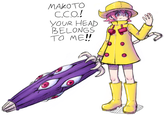
| Hajime Saito | Makoto Shishio! | Makoto CCO! |
| Your Head belongs to me! | Your Head Boron Shite mii | |
| (Let your head drop! Huh?) | ||
| Gatotsu Zero Style | Gatochu Eros Time! | |
| (Gatochu Erotic Time!) | ||
| Tú cabeza es mía | Okane Kaeshite-ya | |
| (Your Head belongs to me) | (Pay back my money!) | |
| Sanosuke Sagara | Não faça isso | No-Pan Stylist |
| (Don't Do it) | (Pantieless Stylist) | |
| Doble impacto! | (Goblin Bat!) | |
| (Double Impact!) | (Goblin's bat!) | |
| Kenshin Himura | Ryu – tsui! Sho – sen! | Furu-Chin! Sa-sen! |
| (Full exposure of the penis! Sorry!) | ||
| Tsumuji. Arashi! | Susamajii Ero scene | |
| (Awesome erotic scene) | ||
| Kuzu Ryusen! | Otoriyose! | |
| (Back-order!) |
Videos
For more videos, check out the videos section in this entry.
|
|
Kishimen[8] |
|
Clash on the Big Bridge[9] |
Rhythm Heaven Parody[10] |
|
Cowboy Bebop OP Parody[11] |
MAD Medley[12] |
Search Interest
External References
Editor’s Note: Registration is needed to browse the original videos listed in this section.
[1] Wikipedia – Rurouni Kenshin
[2] Nico Nico Douga – るろうに剣心 英語版 / Posted on 04-02-2007 (deleted)
[3] Nico Nico Douga – マコトシシオは大変なものをフタエノキワミ、アッー!【動画版】ver0.9 / 08-24-2007 (deleted)
[4] Nico Nico Douga – 各国の『フタエノキワミ、アッー』を検証してみる / 09-04-2007 (deleted)
[5] CCOペディア-フタエノキワミ、アッーまとめwiki (Japanese, Internet Archive)
[6] Nico Nico Douga – Search results for KYM
[7] Nico Nico Douga – 激突!フタエノキワミ、アッ-!砕ける 左之助の拳 / Posted on 09-08-2007 (deleted)
[8] Nico Nico Douga – 【MAD】フタエノキワミできしめん / Posted on 09-24-2007
[9] Nico Nico Douga – ビッグブリッヂのキワミ / Posted on 10-01-2007
[10] Nico Nico Douga – フタエ天国『をとりよせ』 / Posted on 02-17-2007
[11] Nico Nico Douga – カウボーイキワップ / Posted on 12-11-2007
[12] Nico Nico Douga – 【KYM】 合作!フタエノキワミ 英雄達の軌跡 【修正版】 / Posted on 01-01-2011
Recent Videos 21 total


![[AVIS] Futae no Kiwami VS. Falcon Punch](https://a.kym-cdn.com/assets/blank-b3f96f160b75b1b49b426754ba188fe8.gif "[AVIS] Futae no Kiwami VS. Falcon Punch")


Recent Images 40 total
Share Pin






Comments ( 21 )
Sorry, but you must activate your account to post a comment.
Please check your email for your activation code.