













Photo-a-Day
Part of a series on Stop Motion. [View Related Entries]
| Navigation |
| About • Origin • Spread • Search Interest • External References • Recent Images • Recent Videos |
About
Photo A Day projects, also known as 365 Projects, involve people taking one photograph a day and collecting them on a blog, social network or in a video compilation.
Origin
In 2004, web developer George Taylor McKnight[9] began taking a photo every day as a personal challenge for himself as well as a way to hone his photography skills. He named the endeavor Project 365[8], then took a year off before resuming again in 2006[10], this time using Flickr to host his photos and starting a group[11] to encourage other users on the site to join in. Though his second project has since been removed, the Project 365 group has grown to 26,311 members as of June 2012, with 1,496,689 photos in the pool.

Precursor
Photo taking traditions have been around since the beginning of portrait photography[1], in the forms of a yearly family portrait or school portrait. A yearly photo series titled The Brown Sisters[2] began in 1975 by photographer Nicholas Nixon.[3] The series features Nixon's wife Beverly Brown and her three sisters, Heather, Mimi and Laura, arranged in the same order shot on an 8×10 view camera. As of 2010, there are 35 photos.[5] The series has been displayed at the National Gallery of Art[4], The Metropolitan Museum of Art[6] and the Museum of Fine Arts Boston.[7]


Spread
McKnight's project was featured on photography site Photojojo[31] and Lifehacker[16] in October 2006. Following his project, several other similar photography challenges appeared online, including a second Flickr pool[15] just for self-portraits in January 2008, the social networking style sharing community 365 Project[13] in January 2009 and theme-based forum community P365[14] in December 2009.
Photo-a-Day Videos
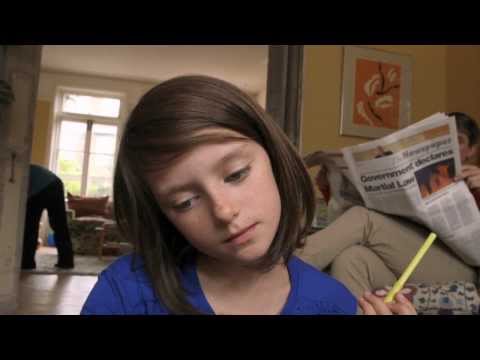
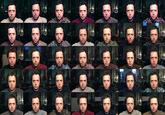
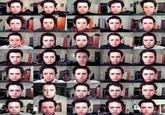
The first video compilation of daily self-portraits was uploaded via YouTube on August 11th, 2006 by film and video artist Ahree Lee[32] (below left). Her video spanned three years worth of photos. Sixteen days later, New York based photographer Noah Kalina[26] uploaded a similar photo compilation (below right), featuring six years worth of photos taken between January 11th, 2000 and July 31th, 2006. As of June 2012, Lee's video has 9 million views while Kalina's has 23 million.
In 2006, Kalina's video[30] was featured on several news sites including the Washington Post[27] and the New York Times.[28] The following year, Everyday was parodied on an episode of The Simpsons titled "Eternal Moonshine of the Simpson Mind"[33], using the same song, composed by Carly Comando.[34] Kalina was also selected to photograph the wedding of Facebook CEO Mark Zuckerberg in May 2012. As of June 2012, he has continued to take a daily self-portrait.[26]
Notable Videos
James Livingston
In 2008, writer Chris Higgins came across a collection of daily polaroids taken between March 31st, 1979 and October 25th, 1997 on a website titled Some Photographs of That Day.[20] After looking through the thousands of photos, Higgins pieced together the story of the photographer’s life, melanoma treatment and eventual death, which was eventually published as an article on Mental Floss[21] about his quest to find the man’s identity. He learned that the photographer was film-maker Jamie Livingston[19] and the photos were posted online by his close friends Hugh Crawford and Betsy Reid as a memorial to their friend. Crawford kept a blog[35] about the digitization, collecting notes from other friends about Livingston and his life as well as news stories about the site including ones on the Guardian[22], the New York Times[23] and Fox News.[24] Before the Mental Floss article brought Livingston's project to a wider audience, the photos were put on view at Bard College[25] in October 2007, ten years after his death.

Clouds 365
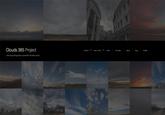
In July 2009, Multimedia artist Kelly DeLay began a project titled Clouds 365[17], which involves taking photos of the sky at different times and in a variety of places every day.

Search Interest
External References
[1] Wikipedia – Portrait photography
[2] Nicholas Nixon – 25 Years of the Brown Sisters and New Work
[3] Wikipedia – Nicholas Nixon
[4] National Gallery of Art – Nicholas Nixon: The Brown Sisters
[5] AcidCow – The Brown Sisters Project
[6] The Metropolitan Museum of Art – The Brown Sisters, Marblehead, Massachusetts
[7] The Museum of Fine Arts Boston – Nicholas Nixon: Family Album
[8] Project 365 – 12.31.04| The Project 365 Recap
[10] gtmcknight – Project 365: 2006 Recap
[11] Flickr – Project 365 pool
[12] Zone Zero – The Arrow of Time
[13] 365 Project | January 2009
[15] Flickr – A Photo A Day | January 2008
[16] Lifehacker – Project 365: Take a photo a day for a year
[17] Clouds 365 | July 2009
[19] Wikipedia – Jamie Livingston
[20] Some Photographs of That Day
[21] Mental Floss – He Took a Polaroid Every Day, Until the Day He Died
[22] The Guardian – Instant Recall
[23] New York Times – The City Visible
[24] Fox News – Daily Polaroids Detail Last 18 Years of NYC Man's Life
[25] Bard College – Photo of the Day, by Bard Alumnus Jamie Livingston On View in October
[27] Washington Post – He Oughta Be in Pictures
[28] The New York Times – Look at Me, World! Self-Portraits Morph Into Internet Movies
[29] New York Magazine – Meet Noah Kalina, the Zuckerberg Wedding Photographer and Former Viral-Video Sensation
[30] Wikipedia – Everyday (video)
[31] Photojojo – Project 365: How to Take a Photo a Day and See Your Life in a Whole New Way
[33] Wikipedia – Eternal Moonshine of the Simpson Mind
[34] New York Observer – D’oh-tube! Internet Sensation Scores Big Simpsons Moment
[35] Hugh Crawford's Blog – Posts tagged "Jamie Livingston"









![Day 1 [ 3 years - lip sync everyday ]](https://i.ytimg.com/vi/MiRMD_v2K0g/hqdefault.jpg "Day 1 [ 3 years - lip sync everyday ]")














Comments ( 19 )
Sorry, but you must activate your account to post a comment.
Please check your email for your activation code.