




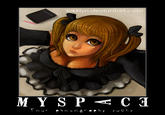
MySpace Angles

Confirmed 230,437
Part of a series on Selfie. [View Related Entries]

MySpace Angles
Part of a series on Selfie. [View Related Entries]
This entry contains content that may be considered sensitive to some viewers.
| Navigation |
| About • Origin • Spread • Notable Examples • Search Interest • External References • Recent Images • Recent Videos |
About
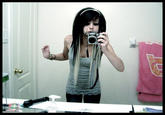
MySpace Angles is the practice of photographing oneself at a particular angle for the sake of obscuring one's own facial flaws. This "beauty through obscurity" phenomenon has existed possibly since the dawn of photography itself, but the term "MySpace angles" or simply "The Angles" emerged following the launch of social networking site MySpace in 2003. Despite the name "MySpace angles," this phenomenon is not confined solely to MySpace and the term can be used to refer to vainly obscured photos on any social networking site.
Origin
Although it remains unclear who first coined the term "Myspace angles," the practice of photographing oneself at a flattering angle arose sometime in the early 2000s with the introduction of consumer-grade digital cameras and early social networking sites like Friendster[1], LiveJournal and MySpace.[2] Such online behavior shaped by vanity and self-image can be also observed elsewhere across different languages and cultures. For example, on the Korean web, the same angling technique is referred to as Ulzzang ("best face") angle.
The Technique
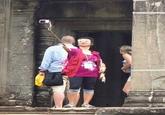
The desired effect is often achieved by raising the camera high above one's head at arm's length, as depicted in the image shown left below. Taking a picture from above, with a high-angle shot or at least a shot that shows mostly one's face, emphasizes the face and deemphasizes the body.


Spread
One of the first parodies of the technique can be found in a November 2005 video made for a class project. Two self-proclaimed popular girls were seen angling the camera as they took pictures of themselves.
The first Urban Dictionary[4] definition of the term "MySpace Angles" was submitted on February 10th, 2006. Another Urban Dictionary entry[7] also included the use of contrast and brightness as part of creating "The Angles":
The angle is usually associated with the MySpace photoshopping which consists of a ridiculous brightness and contrast adjustment which makes it even harder to see who the person is. Sometimes used to make grim people look alright.
David Lehre's Short Films
In February 2006, David Lehre released a short independent film titled Myspace: The Movie[3] to his website. The film begins with two male friends sitting in front of a computer and checking out the MySpace profile of a woman whom one of them is going on a blind date with. While examining her photos, they suspect that she may be unattractive and insecure due to her penchant for "The Angles," or the practice of self-photography at an extreme angle to obscure one's flaws.
The director claimed to have coined the term after "seeing TONS of beautiful girls on myspace… then, meeting them in person and realizing they look nothing like their photos and they, had in fact, figured out their best 'angles.'" The term was referenced once again in Lehr's 2008 followup project Facebook the Movie.. [5]
Pear Chan
In December 2008, photos of a new webcam girl surfaced on 4chan and caught Anonymous' attention. Her portraits did well in capturing her aesthetically pleasing facial features, but the later discovery of her full-body shots caused Anonymous to dub her the "Pear Chan."[6] On 4chan, camgirls tend to get plenty of attention and certain favorites are often given the honorific suffix of "-chan" whether they post pics themselves or if someone else simply posts pics of them.


Debate
Though men and women alike have been known to practice using "the angles," there is a common perception that women utilize the technique more often than their male counterparts. Furthermore, there are many who feel as though they have been "tricked" after having met someone who does not live up to the image they have portrayed online. This topic was discussed and criticized on many blogs like the articles "I Look Stupid" on Slate[8] and "Beware of the Dreaded Myspace Angles"[15] on Official Dating Resource, as well as their followup article "Revenge of the Myspace Angles."[9] There are also academic papers about the impact of social networking sites on people, such as "You Looked Better on MySpace: Deception and authenticity on Web 2.0"[10] which was quoted in an article titled "MySpace Angle Research" published by Guardian[11] in July 2009.
Notable Examples
The discussion of the hazards of MySpace angles also took place in the form of YouTube videos:
Samsung Ad Campaign: Own the Angles
In August 2009, Samsung launched a viral campaign for their brand new ST 550/TL225 camera, which was produced by the viral marketing agency The Viral Factory. The short ad featured the slogan "Own the Angles"[12] and illustrated how classic horror monsters can transform themselves into cute beings with the proper aid of "The Angles":
The Importance of The Angle
On August 9th, 2013, YouTuber Namsik uploaded a selfie video titled "The Importance of The Angle," which begins with a young South Korean woman looking at the camera from an unflattering angle, before she raises the camera above her head to reveal a drastically different impression of her facial features.
The video instantly went viral on YouTube and the South Korean internet communities, leading to a series of copycat videos featuring both men and women.
Search Interest
External References
[2] Wikipedia – Friendster
[3] David Lehre – Myspace: The Movie (via Archive.org)
[4] Urban Dictionary – MySpace Angles
[5] David Lehre – Facebook: the Movie.
[6] Encyclopedia Dramatica – Pear Chan.
[7] Urban Dictionary – MySpace Angle
[8] Slate – I look stupid
[9] Official Dating Resource – Revenge of the Myspace Angles
[10] First Monday – You Looked Better on MySpace: Deception and authenticity on Web 2.0
[11] Guardian – MySpace Angle Research
[12] Campaign Live – Own The Angles
[13] YouTube – Search Results for 'The Importance of Angles
[14] YouTube – Playlist: The Importance of Angles
[15] Official Dating Resource – Beware of the Dreaded Myspace Angles
Related Entries 41 total



.jpg "Bikini Bridge")





Recent Videos 1 total

Recent Images 31 total







Share Pin







Comments ( 21 )
Sorry, but you must activate your account to post a comment.
Please check your email for your activation code.