







Forced Memes
Part of a series on Memes. [View Related Entries]
[View Related Sub-entries]
| Navigation |
| About • Origin • Spread • Notable Examples • Search Interest • External References • Recent Images • Recent Videos |
About
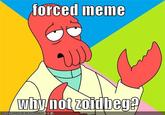
Forced Memes refer to any "meme" that is artificially created and spread rather than organically spreading through word of mouth as a naturally created meme. Typically, forced memes made with the intent of becoming a meme are aggressively promoted by their creators, small dedicated groups or companies attempting to use them for viral marketing or astroturfing. While many forced memes quickly disappear, some have successfully become a part of internet culture whether with their original intent or ironic versions and anti-memes mocking them. The Streisand Effect, when something becomes memetic due to attempts to remove or hide it, is the opposite of this phenomenon.
Origin
Although the exact first use of the term "forced meme" online is unknown, it likely emerged alongside early meme culture in the mid-2000s. One such example of an early discussion of the term comes from a blog post, titled "What Do You Call A Meme That Isn't A Meme," on the site Successful Blog[4] from April 23rd, 2007. In this post, user ME Strauss uses the term "forced meme" to describe memes that are spread through a concerted effort.
Most instances of forced memes are small-scale efforts by an individual to create a meme, but occasionally through a company or brand that will attempt to force a meme through viral marketing or astroturfing in order to promote their product, such as Circus Afro for the 2012 film Madagascar 3.[1][2]
Spread
On April 28th, 2008, the term was covered in a research paper posted by Cyle Gage[5] that discusses several elements of internet culture. Under the section "Forced and Anti-Memes," the paper describes such memes as occurring "when a group of people tries to forcefully popularize a meme by spamming it." As a counter to forced memes, the paper also suggests that anti-memes are often created as a result to subvert a forced meme such as Milhouse is Not a Meme (example seen below).

On November 19th, 2009, the definition for "forced meme" was added to Urban Dictionary[6] by user Grandmaster the Grandmaster (shown below). Defined as, "a 'meme' that came to be through consistent posting of the 'meme' by the creator of the 'meme,'" the entry is the top definition on the site, accumulating 142 likes in roughly 11 years.

In August 2010, the website TV Tropes [3] published an article on forced memes describing the act as "trying to intentionally raise the popularity of something to memetic status [that] can involve mass repetition of a phrase or trying to convince someone else that it is already memetic."
Notable Examples
Milhouse is Not a Meme
Milhouse is Not a Meme refers to Simpsons character Milhouse becoming the subject of a series of spam threads on 4chan's /b/ board in 2004 and 2005. This forced meme attempt spurred /b/ users to spam "Milhouse is not a meme," causing this phrase to become a meme in itself while the Milhouse forced meme failed. Although the Milhouse spam threads have vanished, Millhouse has become forever synonymous with forced memes. Many attempts to force memes are now met with Millhouse and "Millhouse is not a meme" reaction images.

Fuck Yeah Seaking
Fuck Yeah Seaking originated on /b/ as a forced meme similar to Milhouse. Fuck Yeah Seaking was eventually popularized not only on /b/ but many other websites, commonly seen interacting with other memes. While people note that it is a forced meme, that particular history has faded through the organic use of the meme.

X is Now a Meme
X is Now a Meme refers to when someone declares something "is now a meme" or "is a meme" as a method of forcing memes. It is prominent on imageboards like 4chan but can be used on virtually any forum.

Girugamesh
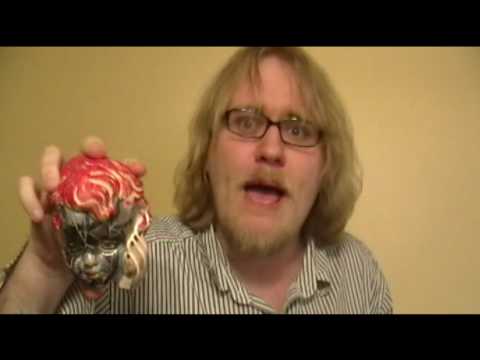
Girugamesh (Japanese: ギルガメッシュ Girugamesshu) is the name of a Japanese metal band, which was derived from the ancient Sumerian king Gilgamesh. On the web, Girugamesh now refers to an internet meme that sprang out of a web commercial made for the 2009 Sakura-Con, an annual anime convention in Seattle. In the 30-sec promo taking place at a sushi bar, a brief-second appearance of a man in gothic attire stood out as highly exploitable.

Search Interest
External References
[1] Wikipedia – Viral Marketing
[2] Wikipedia – Astroturfing
[3] TV Tropes – Forced Meme
[4] Successful Blog – What Do You Call a Meme that Isn’t a Meme?
[5] Cyle Gage – Forced and Anti-Memes
[6] Urban Dictionary – Forced Meme



















Comments ( 92 )
Sorry, but you must activate your account to post a comment.
Please check your email for your activation code.