




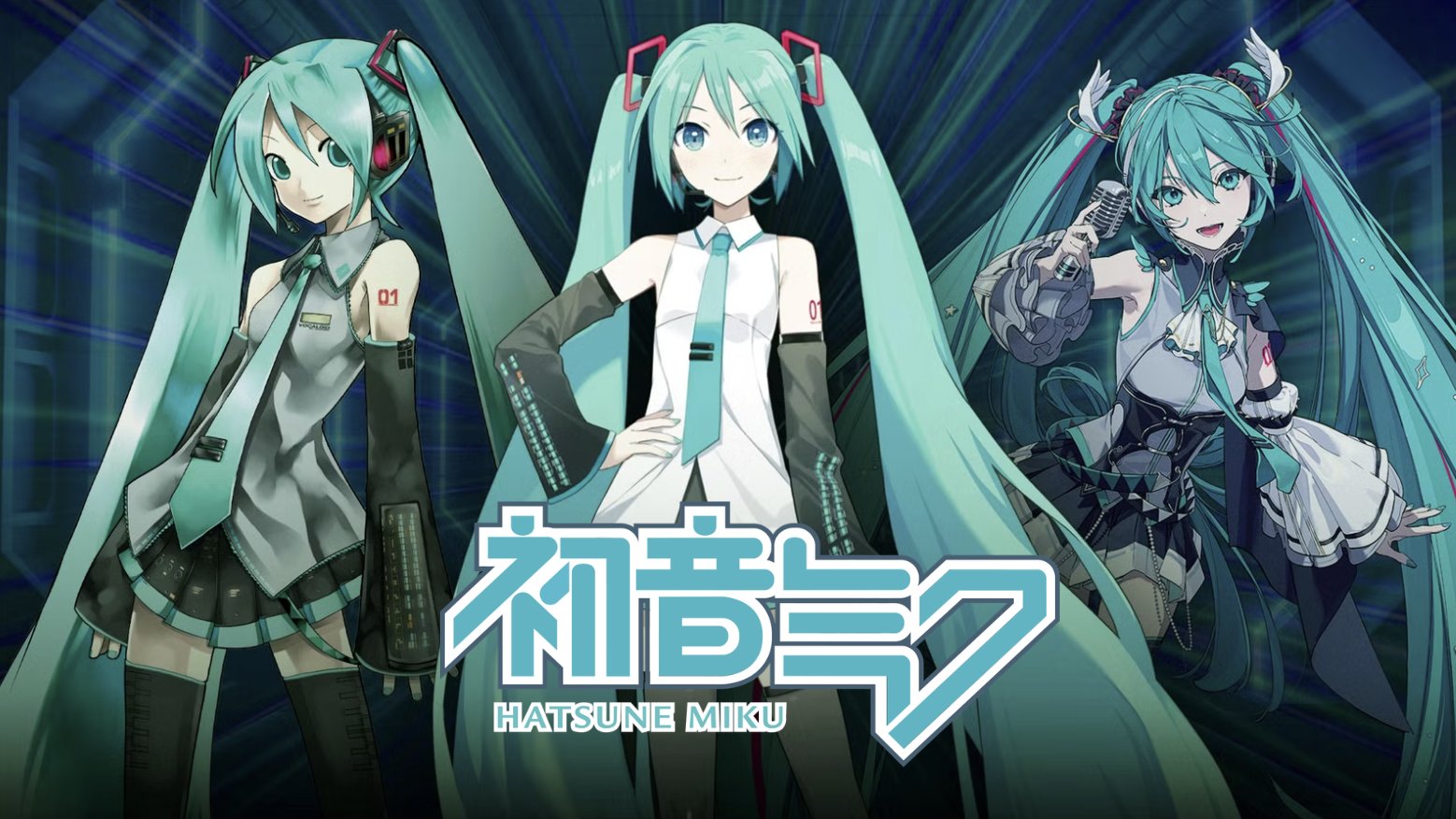





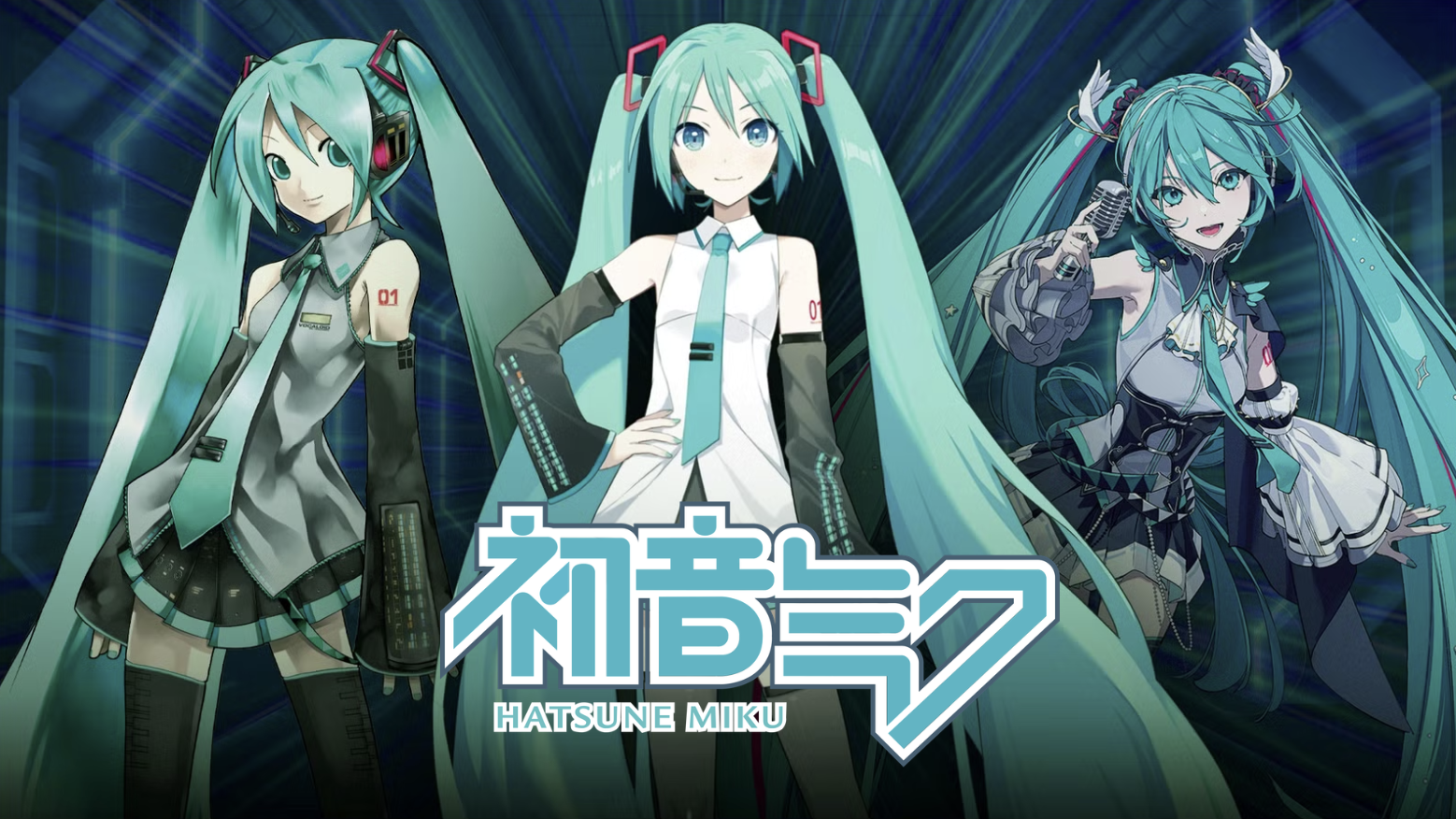
Hatsune Miku (初音ミク)
Part of a series on Vocaloid. [View Related Entries]
[View Related Sub-entries]
About
Hatsune Miku (初音ミク) is a Vocaloid voice synthesis software application developed by Crypton Future Media. Released in August 2007, the software utilized Yamaha's Vocaloid 2 engine and voice samples recorded by Japanese voice actress Saki Fujita, allowing users to generate sung vocals by inputting melodies and lyrics.
Often regarded as a pioneering figure of internet culture and the world's first virtual idol, Miku was marketed alongside an original anime-style character design that quickly became inseparable from the software itself. Over time, the character grew beyond her origins as a voicebank to become one of the most recognizable figures in otaku culture, Japanese popular music, and internet culture worldwide.
History and Development
Vocaloid (Japanese: ボーカロイド) is a vocal synthesizer developed by Yamaha Corporation in collaboration with the Music Technology Group at Pompeu Fabra University in Barcelona.[2] The technology was first released commercially in 2004 under the name Vocaloid. The software is able to "sing" by piecing together phonemes (sounds made by humans to create words and syllables) at different pitches with different settings such as vibrato, dynamics, pitch bends and transitions.[1]
Miku was developed and distributed by Crypton Future Media, Inc., which was initially an importer of sound devices based in Sapporo, Japan. Crypton's role in the VOCALOID era was public relations, promotion, and distribution, with early Vocaloids being developed by Yamaha Corporation. Crypton Future Media began production on actual voicebanks in early 2007, after the announcement of VOCALOID2.[3] Though many primary resources have been lost over time, an update from the Japanese blogging website[4] SONICWIRE, posted by the user wat on May 25th, 2007, showcases some of the development process. Original and translated posts can be seen below:
![[Vocaloid2情報] 企画制作時の悩みと答え (後半) 2007年5月25日 21:47 by wat VOCALOID 2 制作進行中… @ CR SPTON 今週も、Vocaloid編集三昧、”地道な修正/細部改善作業=時間との勝負”が続いております。 watです。 さて前回は、「実在の歌手をそのままボーカロイド化 (ある種、現実のコピー) するより、 ボーカロイドに最適な声質をシンガーと方 と共にデザインする (程よくデフォルメされたバーチャルシンガーを創作する)方が良いのではないか?」というアイディアに至った 所までをお話しました。 そこで我々が考えたのが”声優”としてのスキルがある、”プロフェッショナルな形で可愛い声を作り出せる女性”にお願いしようと 言うアイディアでした。 ・・・その後、幾度かの会議を経て、トントン拍子で話は進み、 クリプトンは、 複数の歌手も所属する某大手声優プロダクションと契 約を交わすことになったのです。 勿論、 今後のVocaloidシリーズの全てを声優の方にお願いするという事では有りませんが、 声優さんから得られる(細かい調整 が可能な)完成度の高いキャラクターと、声の出だしや消え際のニュアンスのコントロール(←実はこれがVocaloidにとって一番重 要だったり…)は、素晴らしく私達のVocaloidライブラリ作りに沢山のヒントと可能性を与えてくれました。 つまりそれは、人の声を用いて、 Vocaloidを作る際に発生する”癖”や”機械的な特徴”さえも逆算して(デフォルメして)声優さんに 演じてもらい、”今までのボーカロイドのイメージ”を越える、素晴らしいバーチャルシンガーを作ろう!という試みです。 そういった経緯から、 Vocaloid CV (キャラクター・ボイス)シリーズというコンセプトで、 様々な個性やカラーをもったVocaliodシリー ズを考案するに至り、今年夏にその第一弾を発売する運びとなったのです。](https://i.kym-cdn.com/photos/images/newsfeed/003/270/125/ed1.png "voclaoid2 announcement blog post")
![[Vocaloid2 Information] Problems and Solutions During Planning and Production (Part 2) May 25, 2007 21:47 by wat VOCALOID 2 CRYPTON This week, too, I'm immersed in Vocaloid editing, continuing the "meticulous correction/detail improvement work = a race against time." This is wat. Last time, I explained how I arrived at the idea that "instead of simply tuming a real singer into a Vocaloid (a kind of copy of reality), wouldn't it be better to design a voice quality that is optimal for a Vocaloid in collaboration with the singer (creating a moderately stylized virtual singer)?" So, our idea was to ask a woman with the skills of a "voice actress," someone who could "create a cute voice in a professional way." ..After several meetings, things progressed smoothly, and Crypton ended up signing a contract with a major voice acting agency that also manages several singers. Of course, this doesn't mean we'll be asking voice actors to voice all future Vocaloid series, but the high-quality characters (which allow for fine-tuning) and the control over nuances of the voice's beginning and ending (which is actually the most important aspect of Vocaloid...) that we can obtain from voice actors have given us a lot of hints and possibilities for creating our Vocaloid libraries. In short, it's an attempt to create an amazing virtual singer that surpasses the "previous image of Vocaloid" by using human voices, and even working backward (and exaggerating) the "quirks" and "mechanical characteristics" that arise when creating Vocaloid, and having voice actors perform them! Based on these circumstances, we came up with the concept of the Vocaloid CV (Character Voice) series, and devised a Vocaloid series with various personalities and colors, and we are pleased to announce that the first installment will be released this summer.](https://i.kym-cdn.com/photos/images/newsfeed/003/270/117/e2f.png "voclaoid2 announcement blog post english")
On June 25th, 2007, wat once again posted an update[5] to SONICWIRE, stating that the voicebank was almost completed and giving readers a first look at Crypton's first Vocaloid, Hatsune Miku, writing: "皆様、何卒、何卒、この子を宜しくお願いいたしますっ!" or "Everyone, please, please give her your support!"
![[Vocaloid2情報]新ボーカロイド「ミク」90%完成 2007年6月25日 23:03 by wat VOCALOID 2 制作進行中・・・ @ CR SPTON またもや、暫くの間、 情報更新が滞ってしまい申し訳ありません。 幾つかのトラブル等があり中々、時間が取れなかった(と言いますか、 皆様にご報告できる情報が定まらなかったのですが・・・) 事もありますが、制作作業は”ずぅ~っと”缶詰状態で行っておりました。 その甲斐有ってか、 データベース (声のライブラリ部分) 作成の進捗状況は90%程度まで進んでおり、今年8月中のリリースに向かっております。 今夜もまだまだ、 ガンバリマス。 また、上記画像はお察しのとおり、 Vocaloid2 CVシリーズ第1弾(コードネーム) 「ミク」の立ち姿です。 正式発表時には、苗字も付く と思います。 皆様、何卒、何卒、この子を宜しくお願いいたしますっ! m(_)m。 ( 2 ヶ月間&毎日10時間以上、声を聞き、声繕いをしていたら、 スタッフ一同なんとも言えぬ親愛の情が芽生えてしまいました・・・) 完成&リリースまで今しばらくお待ちくださいませ。](https://i.kym-cdn.com/photos/images/newsfeed/003/270/127/554.png "miku announcement sonicwire")
![[Vocaloid2 Information] New Vocaloid "Miku" 90% complete June 25, 2007 23:03 by wat VOCALOID 2 CRYPTON Once again, I apologize for the delay in updating the information. Due to various troubles and other issues, I haven't been able to find much time (or rather, I haven't been able to finalize the information I can report to everyone...) but I've been holed up working on the production "all this time." Thanks to that, the database (voice library) is about 90% complete, and we're aiming for a release in August of this year. I'll keep working hard tonight as well. As you might have guessed, the image above shows the first in the Vocaloid2 CV series (codename) "Miku" in a standing pose. I think she'll be given a sumame when she's officially announced. Everyone, please, please give her your support! m(_)m (After listening to his voice and helping him refine it for over 10 hours every day for two months, all the staff members developed an indescribable feeling of affection for him...) Please wait a little longer until completion and release.](https://i.kym-cdn.com/photos/images/newsfeed/003/270/128/17b.png "miku announcement sonicwire english")
VOCALOID2 with Hatsune Miku was officially released on August 31st, 2007, receiving unexpected commercial success.[6]
Concept
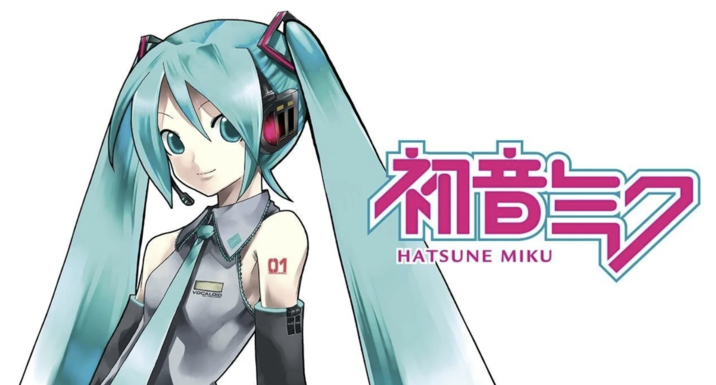
Unlike earlier VOCALOID voicebanks, Miku was advertised as a "Virtual Pop Star" rather than just a vocal synthesizer.[6] Crypton introduced her as “an android diva from a near-future world where songs have been lost.”[7] She is portrayed as a sixteen-year-old girl with long turquoise twintails, a design that quickly became iconic.
In 2007, Crypton asked Japanese mangaka KEI Garou (ケイガロウ), better known as KEI, to create an illustration[8] for their first Character Vocal Series product, Hatsune Miku. While Crypton provided him with detailed concepts for the character, they struggled to explain exactly what a “VOCALOID” was supposed to be. KEI later said he initially found it difficult to picture a “singing computer,” especially because he was unfamiliar with synthesizers at the time.[8]
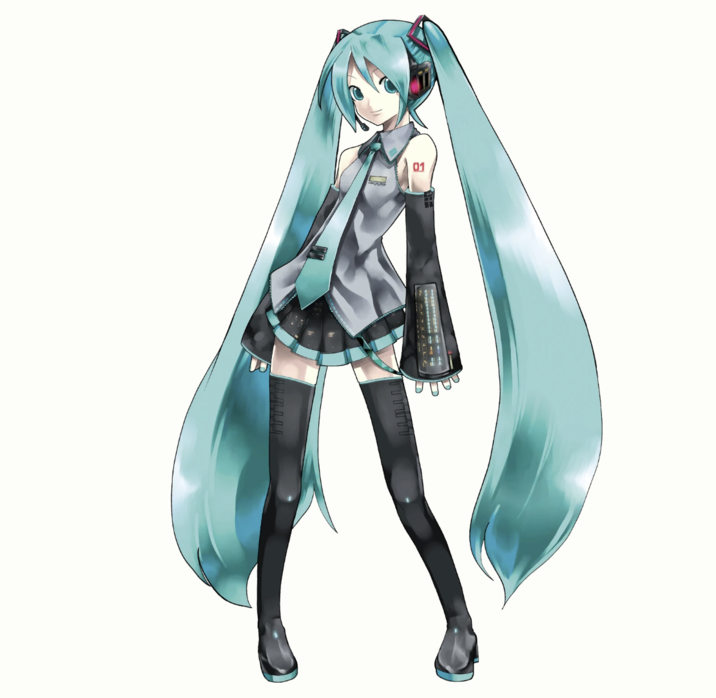
The name Hatsune Miku (初音ミク) is derived from the Japanese characters Hatsu (初, First), Ne (音, Sound), and Miku (未来, Future, though written in katakana as ミク).[6] Her voice is provided by the Japanese voice actress Saki Fujita (藤田咲, Fujita Saki).[6]
Reception
Initial sales of Hatsune Miku exceeded Crypton’s expectations, with demand reportedly surpassing the company’s ability to supply the software.[6] Within the first 12 days of release, nearly 3,000 reservations were placed. On September 12, 2007, Amazon.co.jp reported sales totaling 57.5 million yen, making Hatsune Miku the top-selling software on the platform at the time.[9]
During her first year on the market, Miku reportedly sold more than 40,000 units, averaging around 300 sales per week. Later reports estimated total sales of the software at over 60,000 copies.[10]
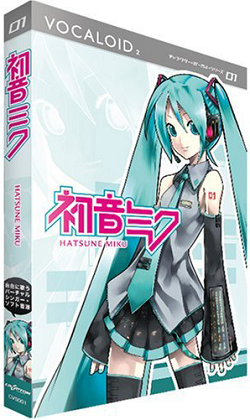
The software and attached character quickly became a cultural phenomenon in Japan. On March 26th, 2009, Japanese news outlet The Asahi Shimbun Company published a short documentary covering Hatsune Miku on their YouTube[11] channel, which has received about 3.5 million views as of May 2026.
Updates
Hatsune Miku has continued to receive updates and expanded voice libraries for nearly twenty years. An example, the Append series, includes Sweet, Soft, and Dark, which provide sweeter, softer, and darker vocal tones, respectively. Other Japanese voicebanks include Light, a higher-pitched vocal; Vivid, a strong high-pitched vocal; Solid, a firmer and clearer-sounding version of the original voice; and an English voicebank for the VOCALOID3 engine. Updated Japanese and English VOCALOID4 voicebanks were released in August 2016, followed by a Mandarin Chinese voicebank in September 2017.[6]
On August 31st, 2025, coinciding with Miku's 18th anniversary, employees of Crypton Future Media announced that Hatsune Miku V6 AI would be released in the first half of 2026 with Japanese and English voice libraries, with Chinese support planned for a future update. Hatsune Miku V6 was released on April 14th, 2026.[6]
On April 17th, 2026, YouTube[12] user @HHS_kt uploaded a video comparing the 2007 Miku V2 software to the newly released Miku V6. The video received around 180,000 views in about one month.
Impact On Early Internet Culture
Hatsune Miku would eventually become a staple of the early internet, both in Japan and later in the West. Initially isolated to Japanese sites like niconico, later re-uploads to YouTube would familiarize English-speaking audiences with Miku and the concept of Vocaloid in general.
Nico Nico Douga
The Japanese video sharing service Nico Nico Douga (NND) is often regarded as ground zero of the Hatsune Miku phenomenon. "01_ballade" is a song by Eiji Hirasawa featuring the Vocaloid voicebank Hatsune Miku. It was uploaded to NND[12] by user 小室コア (ID:446988) on August 29th, 2007, shortly after Hatsune Miku's release. The song is widely recognized as Hatsune Miku's first official demonstration song and is generally regarded as the first song featuring Hatsune Miku to be publicly released online.[13]
On September 4th, 2007, when NND[14] user Otomania posted a Vocaloid remix of another remix series "Leekspin" featuring a heavily-deformed version of Miku, now known as "Hachune Miku". The video was ubiquitous in the Japanese video-sharing community, inspiring other NND artists to create and share their own remixes, cover songs, and fan art, as well as original compositions using the software. As of May 2026, the original upload has received 6.69 million views.
On September 19th, 2007, the song "みくみくにしてあげる♪" (Miku Miku ni Shite Ageru♪) was posted to NND[15] by user ika, which became the first VOCALOID song to reach 1 million views, which was achieved in less than 26 days.[16] As of May 2026, the video has amassed over 17.27 million views.
On December 7th, 2007, NND[17] user and producer ryo (ID: 317063) uploaded the song "Melt," which is widely credited with catalyzing the massive 2008 Vocaloid boom on Niconico. The video currently stands at over 17 million views as of June 2026.
On December 10th, 2008, NND[18] user Anonymous (ID:2523470) posted the original "PoPiPo" video, which went on to amass over 3.68 million views as of May 2026. The video, like many others, would later be re-uploaded to YouTube.
YouTube
Many NND videos were re-uploaded to YouTube, where Western audiences could be reached more easily. The increased exposure to English-speaking audiences resulted in many of the reposts reaching substantially higher viewcounts. One of the earliest Hatsune Miku videos posted to the platform, uploaded on October 6th, 2007, by YouTube[19] user @eleea, reflects this phenomenon, having amassed 1.1 million views in contrast to the original NND upload's 335,000.[20]
On December 14th, 2008, YouTube[21] reuploaded an animated music video for the song "World Is Mine," which has amassed over 32.8 million views as of June 2026.
Miku Miku Dance / MMD
Miku Miku Dance is a free 3D animation program created by Yu Higuchi for producing videos featuring VOCALOID characters. Released on February 24th, 2008, MMD allowed users to import character models, apply motion data, adjust poses and expressions, add stages and visual effects, and synchronize animations to music with relatively little technical knowledge. The software quickly became one of Japan's most popular animation programs for hobbyists, leading to the widespread production and sharing of Vocaloid animations on platforms like Nico Nico Douga and YouTube.[22] The tool's ease of access resulted in an explosion of parodies and re-enactments of pop culture references and current events, as well as tributes to other Japanese video memes like Geddan.
MMD played a major role in democratizing 3D animation by lowering barriers to entry for non-professional creators. Much like Adobe Flash did for 2D internet cartoons, MMD enabled users to produce polished animations and still renders from home. Its open and collaborative ecosystem encouraged the sharing of motion data, character models, effects, and tutorials, while community norms around crediting creators helped foster a remix culture. The software's popularity also inspired technical extensions, including motion-capture integrations and advanced visual effects, and even saw occasional use in professional productions.[22]
More broadly, MMD became an example of the early 2010s participatory internet era, demonstrating how accessible creative tools and video-sharing platforms could generate thriving online subcultures whose influence can still be seen in fan animation, VTuber content, and independent 3D media today.
Mainstream Culture
Hatsune Miku rapidly grew from a niche Vocaloid software mascot into a mainstream cultural phenomenon in Japan. Through fan-created music, artwork, videos, live concerts, and commercial partnerships, her popularity expanded internationally, establishing her as one of the most recognizable virtual entertainers in the world.
Concerts
Hatsune Miku's rise as a virtual performer began in 2009, when she and other Vocaloids started appearing in live concert events across Japan. Her first concert appearance was at Animelo Summer Live on August 22, 2009, where she performed as a digitally projected idol at Saitama Super Arena. Days later, she headlined the MikuFes '09 event, which further showcased the potential of virtual concert technology.[23] Footage from MikuFes '09, uploaded by YouTube[24] user @housenka18 on November 14th, 2011, can be viewed below:
Miku's international expansion continued later with her first North American concert tour. In September 2010, a concert screening was held in San Francisco, marking her first major performance event in North America, followed by additional screenings in San Francisco and New York City.[25] Her popularity continued to grow internationally, culminating in a sold-out concert in Los Angeles in May 2011. The event became a milestone for Anime Expo, as it was one of the convention's most successful concert attractions and demonstrated Miku's ability to draw large audiences outside Japan.[25] An upload of a local news report regarding the event, posted to YouTube[26] user @WofleBlazen on July 3rd, 2011, can be viewed below:
Collaborations And Marketing
Hatsune Miku's major brand collaborations have evolved from early Japanese promotions to high-profile global fashion, tech, and lifestyle partnerships, reflecting her transition from niche internet star to mainstream cultural icon.[25]
In May 2011, Toyota partnered with Hatsune Miku for a pair of online advertisements promoting the 2011 Toyota Corolla after obtaining permission from Crypton Future Media to use the character.[26]
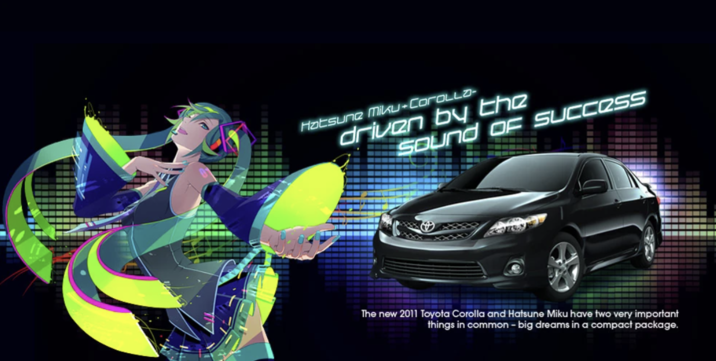
The campaign proved successful, and in November 2011, the U.S. advertisements received a Multicultural Excellence Award in the Digital Media category at the Association of National Advertisers' Multicultural Marketing & Diversity Conference.[26] A compilation of the ads, posted by YouTube[27] user @yamilucy on July 8th, 2011, can be seen below. The video has accumulated 3.9 million views as of June 2026.
One of Hatsune Miku's earliest major steps onto the global stage came through a series of Japanese Google Chrome advertisements that highlighted themes of creativity, collaboration, and user-generated content under the slogan "Everyone's Creator." The campaign attracted millions of views internationally and helped introduce Miku to a wider audience, placing her alongside globally recognized pop culture figures such as Lady Gaga and Justin Bieber.[23]
The advertisement was posted to YouTube[28] by the official @GoogleChromeJapan account on December 15th, 2011, accumulating 6.9 million views.
Miku would eventually become a staple in Japanese advertising. From March 3rd to March 10th, 2012, FamilyMart launched a nationwide Hatsune Miku-themed promotion. During the campaign, participating stores were decorated with Hatsune Miku imagery and offered a variety of exclusive merchandise and limited-edition products featuring the Vocaloid character.[29] A compilation of the ads promoting the event, uploaded by YouTube[28] user @MegurineLuka45 on September 19th, 2012, can be viewed below. As of June 2026, the video has amassed 5.8 million views.
On March 6th, 2013, Domino's posted a now-infamous video announcing the Domino's App featuring Hatsune Miku, a collaborative iOS application developed by Yamaha Corporation's Vocaloid team and Domino's Pizza Japan. Following the announcement, a number of international news and culture websites described the campaign as unusual or bizarre. Despite these reactions, the promotion proved highly successful in Japan, with limited-edition Hatsune Miku pizza boxes selling out nationwide within six days.
The promotional YouTube video featuring Domino's Japan President and CEO Scott Oelkers quickly became a source of internet humor due to its unconventional presentation. YouTube users began creating YouTube Poop parody videos that remixed and exaggerated dialogue from the advertisement. A reupload of the original advertisement, posted March 31st, 2017, by YouTube[29] user @internetguy7860 can be seen below:
The End (stylized as THE END) was a Vocaloid opera created by composer Keiichiro Shibuya in collaboration with visual artist YKBX, architect Shohei Shigematsu, sound artist evala, and other creators. Commissioned by the Yamaguchi Center for Arts and Media (YCAM) in 2012, the production departed from traditional opera by eliminating human performers. Instead, its narrative was conveyed through arias and recitatives performed by the Vocaloid character Hatsune Miku, accompanied by computer-generated music, sound design, and visual imagery.[30][31]
The production was co-directed by Shibuya and YKBX. Visuals were created by YKBX, stage design was provided by Shohei Shigematsu, sound programming was handled by evala, and Vocaloid programming was completed by PinocchioP. Costumes for Hatsune Miku were designed by the fashion house Louis Vuitton under the direction of Marc Jacobs and his studio team.[30]

Lady Gaga's artRAVE: The ARTPOP Ball and David Letterman Appearance
By the mid-2010s, Hatsune Miku had become one of the most prominent virtual performers in the world. A series of high-profile concert appearances, media appearances and artistic projects introduced the character to audiences outside the Vocaloid community and contributed to her growing mainstream recognition.
From May 6th to June 3rd, 2014, Hatsune Miku served as an opening act for select dates of the North American leg of Lady Gaga artRAVE: The ARTPOP Ball tour. Performing a 25-minute set as a holographic projection, Miku appeared in a newly designed module and was accompanied by two background dancers.[32]
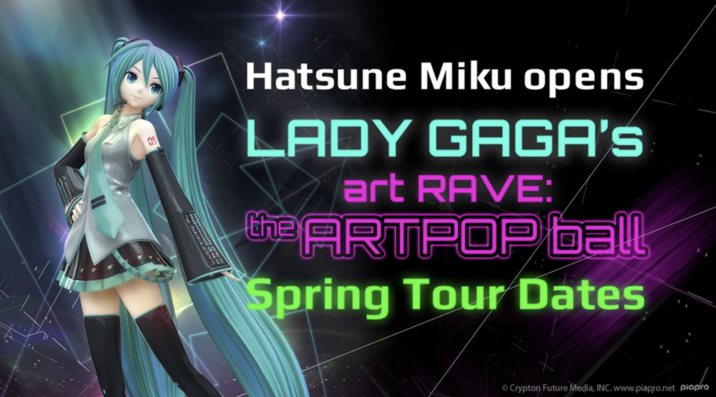
The tour marked one of Miku's highest-profile appearances before a mainstream Western pop audience and contributed to her growing international visibility. A video posted on July 29th, 2014, by YouTube[33] user @Karin12822 shows the singer talking about the virtual diva, which received 140,000 views in about 11 years.
On October 8th, 2014, Hatsune Miku appeared on the television program Late Show with David Letterman, performing as a holographic projection accompanied by a live backing band. The appearance introduced Miku to a broader American television audience and received significant media attention. In coverage of the performance, Jeremy Gordon of Pitchfork remarked that "the future is now."[34] An upload of the performance, posted to YouTube[35] by the official @Letterman channel on May 12th, 2023, Can be seen below:
Legacy
Despite originating in the late 2000s, Hatsune Miku has remained a prominent figure throughout the late 2010s and 2020s. Her continued presence in online communities, meme culture, music, and popular media demonstrated an enduring level of relevance uncommon among digital characters.
Hatsune Miku made her debut at the Coachella Valley Music and Arts Festival on April 12th, 2024. The appearance marked one of the most prominent festival performances of Miku's career and represented a significant milestone in the growing acceptance of virtual performers within mainstream live music events.[36] Footage captured at the performance, posted by YouTube[37] user @asian.pop.footage on April 13th, 2014, can be seen below:
On January 4th, 2025, Hatsune Miku was added to Fortnite as part of the game's Festival mode.[38] The collaboration introduced Miku-themed character skins, cosmetic items, and music content to one of the world's most popular video games, exposing the virtual singer to a new generation of players and further demonstrating her continued cultural relevance nearly two decades after her debut. A trailer for Miku's Fortnite reveal, posted by YouTube[39] user @FNFestival Janurary 13th, 2025, can be viewed below:
On September 11th, 2025, YouTube[40] user @KorbroYT posted a video detailing the various eras of Hatsune Miku, which has received about 750,000 views as of June 2026.
Related Memes
Since her debut in 2007, Hatsune Miku has remained a recurring subject of internet memes and online culture. Memes centered on Miku have ranged from fan-created animations and songs to ironic internet trends. Her continued presence in online culture for nearly two decades has made her one of the internet's most enduring digital icons, with new generations of users regularly rediscovering and reinterpreting the character.
Nyanyanyanyanyanyanya!
Nyanyanyanyanyanyanya! is a series of highly repetitive videos built around an anime character swaying side-to-side or bobbing up-and-down with "Nya's" and other objects popping up in the background. Since the debut of the original version featuring Hatsune Miku synthesizer by Nico Nico Douga user "daniwellP," the addictive song has spawned dozens of remixes and MAD videos starring a wide range of anime-related characters.
The song gained much of its international popularity in April 2011, when YouTuber saraj00n posted a remix video titled Nyan Cat, using comic illustrator PRguitarman's GIF animation of a flying kitten with the body of a strawberry pop tart.

Hatsune Miku Created Minecraft
Hatsune Miku Created Minecraft refers to a fictional narrative that Vocaloid character Hatsune Miku created popular video game Minecraft after the game's actual creator, Markus 'Notch' Persson, made allegedly transphobic comments on Twitter. After a Hatsune Miku parody Twitter account asserted that Hatsune Miku created Minecraft in response, LGBT fans of the game got in on the joke. Since the joke got popular, there have been other instances where a creator of a beloved piece of media says something offensive to LGBT communities, leading fans to assert that Hatsune Miku created the media.

Every Country's Miku / Everything Miku
Every Country's Miku refers to a series of fan art that imagines vocaloid character Hatsune Miku as a native of various countries and places, with Miku usually dressed in national clothing and holding various objects associated with the country's culture. Spawned by the Brazilian Miku meme, the fan art trend achieved virality on X / Twitter in late August 2024.
Search Interest
External References
[1] Fandom – Vocaloid Wiki
[3] Fandom – Crypton Future Media, Inc..
[6] Fandom – Hatsune Miku
[8] Fandom – Official VOCALOID illustrators/VOCALOID2
[14] Fandom – 01 ballade
[22] Fandom – MikuMikuDance
[25] Fandom – Hatsune Miku/Marketing
[26] Fandom – Toyota Corolla Campaign
[31] ATAK – Vocaloid Opera The End
[33] Fandom – Lady Gaga's artRAVE: The ARTPOP Ball
[35] Pitchfork – Holographic Pop Star Hatsune Miku Performs on Letterman
[37] Coachella Valley Independent – Software Superstar Hatsune Miku's Coachella Set Will Celebrate Japanese Culture and Empower Aspiring Musicians Worldwide
[39] Fortnite.GG – Hatsune Miku
Related Entries 15 total

Akita Neru |

Triple Baka |
Vocaloid Character Items |

Tako Luka |

Young Girl A (少女A) |

Yowane Haku |

Go Die! Valentine's Day |
Larval Rin |

Damn You Len |
Alys |

Triple No.1 |
Synthesizer V |
Sub-entries 37 total











Recent Videos 150 total


![[Latest Cover Version] Miku Hatsune "Virtual Insanity" [VOCALOID3]](https://i.ytimg.com/vi/0W-Z_6P3i38/hqdefault.jpg "[Latest Cover Version] Miku Hatsune \"Virtual Insanity\" [VOCALOID3]")
![Hatsune Miku - My Way [Frank Sinatra Cover]](https://i.ytimg.com/vi/zYJzBowi_mc/hqdefault.jpg "Hatsune Miku - My Way [Frank Sinatra Cover]")

Recent Images 1,319 total

![[Vocaloid2 Information] New Vocaloid "Miku" 90% complete June 25, 2007 23:03 by wat VOCALOID 2 CRYPTON Once again, I apologize for the delay in updating the information. Due to various troubles and other issues, I haven't been able to find much time (or rather, I haven't been able to finalize the information I can report to everyone...) but I've been holed up working on the production "all this time." Thanks to that, the database (voice library) is about 90% complete, and we're aiming for a release in August of this year. I'll keep working hard tonight as well. As you might have guessed, the image above shows the first in the Vocaloid2 CV series (codename) "Miku" in a standing pose. I think she'll be given a sumame when she's officially announced. Everyone, please, please give her your support! m(_)m (After listening to his voice and helping him refine it for over 10 hours every day for two months, all the staff members developed an indescribable feeling of affection for him...) Please wait a little longer until completion and release.](https://i.kym-cdn.com/photos/images/list/003/270/128/17b.png "miku announcement sonicwire english")
![[Vocaloid2情報]新ボーカロイド「ミク」90%完成 2007年6月25日 23:03 by wat VOCALOID 2 制作進行中・・・ @ CR SPTON またもや、暫くの間、 情報更新が滞ってしまい申し訳ありません。 幾つかのトラブル等があり中々、時間が取れなかった(と言いますか、 皆様にご報告できる情報が定まらなかったのですが・・・) 事もありますが、制作作業は”ずぅ~っと”缶詰状態で行っておりました。 その甲斐有ってか、 データベース (声のライブラリ部分) 作成の進捗状況は90%程度まで進んでおり、今年8月中のリリースに向かっております。 今夜もまだまだ、 ガンバリマス。 また、上記画像はお察しのとおり、 Vocaloid2 CVシリーズ第1弾(コードネーム) 「ミク」の立ち姿です。 正式発表時には、苗字も付く と思います。 皆様、何卒、何卒、この子を宜しくお願いいたしますっ! m(_)m。 ( 2 ヶ月間&毎日10時間以上、声を聞き、声繕いをしていたら、 スタッフ一同なんとも言えぬ親愛の情が芽生えてしまいました・・・) 完成&リリースまで今しばらくお待ちくださいませ。](https://i.kym-cdn.com/photos/images/list/003/270/127/554.png "miku announcement sonicwire")
![[Vocaloid2情報] 企画制作時の悩みと答え (後半) 2007年5月25日 21:47 by wat VOCALOID 2 制作進行中… @ CR SPTON 今週も、Vocaloid編集三昧、”地道な修正/細部改善作業=時間との勝負”が続いております。 watです。 さて前回は、「実在の歌手をそのままボーカロイド化 (ある種、現実のコピー) するより、 ボーカロイドに最適な声質をシンガーと方 と共にデザインする (程よくデフォルメされたバーチャルシンガーを創作する)方が良いのではないか?」というアイディアに至った 所までをお話しました。 そこで我々が考えたのが”声優”としてのスキルがある、”プロフェッショナルな形で可愛い声を作り出せる女性”にお願いしようと 言うアイディアでした。 ・・・その後、幾度かの会議を経て、トントン拍子で話は進み、 クリプトンは、 複数の歌手も所属する某大手声優プロダクションと契 約を交わすことになったのです。 勿論、 今後のVocaloidシリーズの全てを声優の方にお願いするという事では有りませんが、 声優さんから得られる(細かい調整 が可能な)完成度の高いキャラクターと、声の出だしや消え際のニュアンスのコントロール(←実はこれがVocaloidにとって一番重 要だったり…)は、素晴らしく私達のVocaloidライブラリ作りに沢山のヒントと可能性を与えてくれました。 つまりそれは、人の声を用いて、 Vocaloidを作る際に発生する”癖”や”機械的な特徴”さえも逆算して(デフォルメして)声優さんに 演じてもらい、”今までのボーカロイドのイメージ”を越える、素晴らしいバーチャルシンガーを作ろう!という試みです。 そういった経緯から、 Vocaloid CV (キャラクター・ボイス)シリーズというコンセプトで、 様々な個性やカラーをもったVocaliodシリー ズを考案するに至り、今年夏にその第一弾を発売する運びとなったのです。](https://i.kym-cdn.com/photos/images/list/003/270/125/ed1.png "voclaoid2 announcement blog post")
![[Vocaloid2 Information] Problems and Solutions During Planning and Production (Part 2) May 25, 2007 21:47 by wat VOCALOID 2 CRYPTON This week, too, I'm immersed in Vocaloid editing, continuing the "meticulous correction/detail improvement work = a race against time." This is wat. Last time, I explained how I arrived at the idea that "instead of simply tuming a real singer into a Vocaloid (a kind of copy of reality), wouldn't it be better to design a voice quality that is optimal for a Vocaloid in collaboration with the singer (creating a moderately stylized virtual singer)?" So, our idea was to ask a woman with the skills of a "voice actress," someone who could "create a cute voice in a professional way." ..After several meetings, things progressed smoothly, and Crypton ended up signing a contract with a major voice acting agency that also manages several singers. Of course, this doesn't mean we'll be asking voice actors to voice all future Vocaloid series, but the high-quality characters (which allow for fine-tuning) and the control over nuances of the voice's beginning and ending (which is actually the most important aspect of Vocaloid...) that we can obtain from voice actors have given us a lot of hints and possibilities for creating our Vocaloid libraries. In short, it's an attempt to create an amazing virtual singer that surpasses the "previous image of Vocaloid" by using human voices, and even working backward (and exaggerating) the "quirks" and "mechanical characteristics" that arise when creating Vocaloid, and having voice actors perform them! Based on these circumstances, we came up with the concept of the Vocaloid CV (Character Voice) series, and devised a Vocaloid series with various personalities and colors, and we are pleased to announce that the first installment will be released this summer.](https://i.kym-cdn.com/photos/images/list/003/270/117/e2f.png "voclaoid2 announcement blog post english")

Share Pin






Comments ( 277 )
Sorry, but you must activate your account to post a comment.
Please check your email for your activation code.