






Forced Perspective
Part of a series on Optical Illusion. [View Related Entries]

| Navigation |
| About • Origin • Spread • Notable Examples • Search Interest • External References • Recent Images • Recent Videos |
About
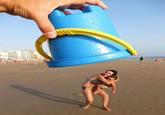
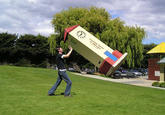
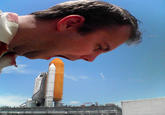
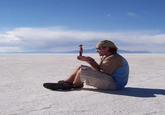
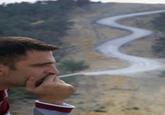
Forced Perspective is a photography technique in which an optical illusion is created by strategically placing a subject or object to appear farther away, closer, larger or smaller than it actually is. While the technique has been employed by various professional photographers and artists for many decades, it became a widespread practice among amateur photographers in the early 2000s with the emergence of inexpensive digital cameras and photo-sharing platforms like Flickr.
Origin
The approach of using perspective in art dates back to the Renaissance period as "erspectival anamorphosis"[1], a type of art that requires a specific vantage point to view. The earliest known example can be traced back to Leonardo da Vinci's "Leonardo's Eye" in 1485.
The German painter Hans Holbein the Younger's[2] 1533 painting "The Ambassadors" famously featured a hidden skull that could only be seen from specific perspectives.


Television and Film
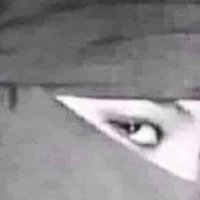
In the 1984 comedy Top Secret!, a phone is strategically placed so that it appears to be close to the camera until it is approached by a character revealing it to be oversized (shown below, left). In the early 1990s sketch comedy television The Kids in the Hall, a recurring character known as the "Headcrusher" would use a forced perspective technique to crush the heads of people within his range of vision (shown below, right).
In Street Art
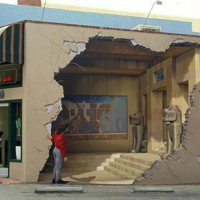
Artists use forced perspective in street art to create alternate landscapes or impossible scenes. Kurt Wenner[13] began the movement in the mid-1980s after selling all of his belongings and moving to Rome to study art. His work was the focus of a 1987 National Geographic documentary titled "Masterpieces in Chalk." Julian Beever, another well-known perspective artist, began making making works with chalk in the mid-1990s.[14] In the following video, photos of both Wenner and Beever's work are shown from several perspectives. In 2009, German artist Edgar Mueller[15] posted a time-lapsed video from the 2008 Festival of World Culture.
Spread
On April 27th, 2005, an entry for “Sidewalk Paintings” was created on the urban legends reference site Snopes[20], which revealed that several photographs of sidewalk perspective art that had begun spreading online were the work of street painter Kurt Wenner. In May of 2005, photographer Michael Hughes[10] began taking a series of photographs in which he replaced various tourist landmarks with souvenir replica models (shown below, left) and uploaded the images to his Flickr[11] page. In October 2006, Flickr[6] user John Robinson uploaded a vintage photograph from the 1930's of his uncle "jumping" over a house (shown below, right).


In 2007, Michael Hughes uploaded another perspective related set, this time with postcards or photographs of tourst sightings placed in front of the actual landmarks, several of which have been chronicled at Mighty Optical Illusions.[12] On Sepetember 21st, 2007, the design blog WebUrbanist[16] published an article titled "3 Amazing 3D Graffiti Artists: Street Painting and Sidewalk Chalk Art", which included several videos showcasing the artwork of Mueller, Wenner and Beever. On October 15th, MetaFilter[17] user gottabefunky submitted a post titled "Biggest 3D street painting ever", which linked to a photograph of Mueller's 280 m² 3D street painting. On February 24th, 2009, The Daily Mail[18] published an article titled "Mind the crevasse: The amazing 3D pavement art that has pedestrians on edge", which covered both Mueller and Beever's work. On May 15th, the crafting community site Instructables[19] published a guide to making 3D anamorphic artwork.

On July 3rd, 2009, the photography blog Digital Photography School[18] published a post titled "15 Forced Perspective Technique Examples", which featured a compilation of example photographs. On May 8th, 2012, Redditor Imrayya submitted a post titled “Forced perspective”[21], which included a photograph taken sideways to appear as if men laying on the ground were standing upright. The post reached the front page of the /r/pics subreddit, receiving over 5,800 up votes and 150 comments within one month. As of June 18th, 2012, a Facebook[25] page for “Amazing forced-perspective photography” has accumulated over 9,200 likes.

Leaning Tower of Pisa
A pervasive example of forced perspective photography is a trend in which tourists pose themselves interacting with the Leaning Tower of Pisa in Italy.[7] The practice was documented on the illusion archive site Mighty Optical Illusions[9] on August 27th, 2006. Several humorous examples have been submitted to the social news site Reddit[22][23][24] (shown below, left, center), including a photograph of a crowd of people attempting various poses (shown below, right).


On May 7th, 2012, YouTuber JegStuffolnfo uploaded a video titled "Troll high-fiving people in Pisa", which featured a man slapping people's hands while they were attempting to take forced perspective photographs in front of the Italian landmark. As of June 18th, 2012, the video has accumulated over 1.9 million views and 830 comments.
Sleeveface and Moneyface
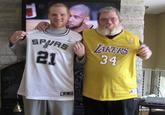
In April of 2007, the Welsh DJ Carl Morris coined the term "sleeveface" after photos featuring him and his friends holding record sleeves over their faces were posted online. A Facebook group was subsequently created by his friend John Rostron, which inspired several others to upload photos of themselves participating in the photo fad (shown below, left). On May 22nd, 2008, user Spunky McPunk from the British digital arts website B3ta submitted a photograph of himself posing with a bank note over his face to an "Image Challenge" forum thread. Several months later, other versions of the photo fad called "moneyface" began appearing across the web (shown below, right).


Notable Examples




Search Interest
External References
[1] Wikipedia – Perspectival anamorphosis
[2] Wikipedia – Hans Holbein the Younger
[4] Wikipedia – Harold Eugene Edgerton
[5] Wikipedia – Stroboscope
[7] Wikipedia – Leaning Tower of Pisa
[8] Flickr – holding up the leaning tower of pisa
[9] Might Optical Illusions (via Wayback Machine) – Leaning Tower of Pisa
[10] Hughes Photography (via Wayback Machine) – Michael Hughes Photography
[11] Flickr – Michael Hughes
[12] Mighty Optical Illusions (via Wayback Machine) – Perspective Postcards Optical Illusion
[13] Kurt Wenner – Kurt Wenner – Master Artist and Architect Street Painting
[14] Skynet.be – Julian Beever
[15] Metanamorph.com – Metanamorph
[16] Web Urbanist – 3 Amazing 3D Graffiti Artists: Street Painting and Sidewalk Chalk Art
[17] Metafilter – Biggest 3D street painting ever.
[18] Daily Mail – Mind the crevasse: The amazing 3D pavement art that has pedestrians on edge
[19] Instructables – How to do 3D Anamorphic Artwork and Sidewalk, Street, and Driveway Art
[20] Snopes – Sidewalk Paintings
[21] Reddit – Forced Perspective
[22] Reddit – Finally a great tourist pic with the Pisa Tower
[23] Reddit – Pisa, looking the other way
[24] Reddit – A friend of mine went to see the Leaning Tower of Pisa, this is the photo he took.
[25] Facebook – Amazing forced-perspective photography
[16] Reddit – Forced perspective
[17] Flickr – Catching Sun
[18] Digital Photography School – 15 forced perspective technique
Related Entries 18 total







Recent Videos 24 total


![How Lord of the Rings used forced perspective shots with a moving camera VIDEO]](https://i.ytimg.com/vi/QWMFpxkGO_s/hqdefault.jpg "How Lord of the Rings used forced perspective shots with a moving camera VIDEO]")
Recent Images 163 total


Share Pin







Comments ( 61 )
Sorry, but you must activate your account to post a comment.
Please check your email for your activation code.