














Vocaloid
This submission is currently being researched & evaluated!
You can help confirm this entry by contributing facts, media, and other evidence of notability and mutation.
| Navigation |
| About • History • Online History • Vocaloid Fandom • Related Software • Various Examples • Search Interest • External References • Recent Images • Recent Videos |
About
Vocaloid (Japanese: ボーカロイド) is a vocal synthesizer released in 2004, created to "sing" by piecing together phonemes (sounds made by humans to create words and syllables) at different pitches with different settings such as vibrato, dynamics, pitch bends and transitions.
History
Vocaloid is a singing voice synthesizer software application developed by Yamaha Corporation in collaboration with the Music Technology Group at Pompeu Fabra University in Barcelona.[1] The technology was first released commercially in 2004 under the name Vocaloid.[2]
The software allows users to synthesize singing by entering lyrics and melodies into the program. It can also generate spoken vocals through typed dialogue and scripts. Vocaloid uses synthesized vocals created from specially recorded samples provided by voice actors, singers and other performers.[1]
A wide variety of voicebanks have been released for use with Vocaloid technology. These voicebanks are typically marketed as complete “virtual singers,” often accompanied by mascot characters or anime-inspired avatars.[3] Many of these mascots are also referred to as “Vocaloids” by fans and are commonly promoted as virtual idols, although some voicebanks are released without official character designs.
A brief explainer on the Vocaloid software and its usage was uploaded to YouTube[4] by user @ricedeity on January 8th, 2021, receiving over 409,000 views in about five years.
Online History
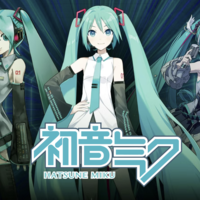
The software experienced a major rise in popularity in Japan following the release of Hatsune Miku by Crypton Future Media as part of the Vocaloid 2 engine. Miku’s commercial success greatly increased public awareness of Vocaloid software as a whole and contributed to the growth of a large online fan community.[5]
The Japanese video-sharing website Niconico also played a significant role in the spread and popularity of Vocaloid culture. Users frequently uploaded original songs, animations, remixes, and fan-made content featuring Vocaloid characters, helping establish the software as a major part of online music and internet culture in Japan.[6]
Vocaloid Fandom
Vocaloidfan.com publishes a weekly feature called “Vocaloid Weekly Ranking,” which ranks the latest Vocaloid videos based on the number of views, comments, and mylists they receive each week. Separate weekly rankings also exist for various Vocaloid subgenres.
Crypton Future Media, the developers of the Vocaloid series, also sponsor another Hatsune Miku fan community site called Piapro, which has become a popular hub for fans to share original songs, artwork, and music videos.
Official Characters
Following Hatsune Miku in the Character Vocal Series were Rin and Len Kagamine, followed later by Luka Megurine. Although additional Vocaloids were released afterward, and some earlier voicebanks also gained popularity, Miku remains the most recognizable and popular character in the franchise.






Fanmade Vocaloid Characters
A large number of fan-created images and videos depict original “Vocaloid OCs” or unofficial characters inspired by Vocaloid. These fan-made characters often feature unique designs, backstories, and character items. Because the franchise lacks a strict official canon, many of the conventions associated with these characters are community-created and are sometimes criticized for being derivative.




Character Items
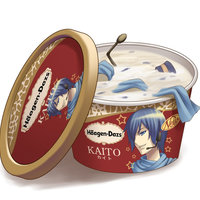
The leek became associated with Hatsune Miku following the popularity of the “Ievan Polkka” video. Soon afterward, many other Vocaloid characters became linked with specific objects or “character items.” Common examples include a road roller for the Kagamine twins, bananas for Len, ice cream for Kaito, sake for Meiko, tuna for Luka, carrots for Gumi, and eggplants for Gakupo.
However, many characters never developed universally accepted items. For example, fans debated whether Sonika should be associated with a ring or a pineapple, while Kiyoteru Hiyama’s notebook was never fully established as an official symbol. Fans also occasionally used parody items to reference technical problems or perceived flaws in certain voicebanks.
Related Software
Miku Miku Dance / MMD
Miku Miku Dance is a freeware animation program originally produced to make movies for Miku Hatsune and other Vocaloids. It allows the importation of various 3D models and motion data that can be applied to those models, allowing large numbers of characters to do the same dance or motion. Miku Miku Dance has oftentimes been compared to the Japanese Equivalent of Source Filmmaker.
Miku Miku Dance has grown from it's mainly Vocaloid use to include a wide variety of other series including, but not limited to, Touhou Project, THE iDOLM@STER and other Nico Nico Douga (NND) related memes.

UTAU
UTAU is a Japanese singing synthesizer application created by Ameya/Ayame (飴屋/菖蒲). Similar to Vocaloid, the software allows users to create synthesized singing voices, though UTAU differs in that it is freeware/shareware rather than commercially licensed. Released in 2008 as a free support tool available for download from its official website, the program’s name means “to sing” in Japanese.
The voice libraries created for the software are officially called “UTAU,” though fans commonly refer to them as “UTAUloids,” as well as “voicebanks” or "libraries." Over the years, countless voicebanks have been developed by independent creators.
Much of the UTAU program's spread is centered around the versatility of the program, allowing anyone to record and create new UTAUloids for free. Further spread can be largely attributed to the eventual popularity of Kasane Teto, a character and voicebank created in 2008 as part of an April Fools’ joke parodying a new Vocaloid release.
@krashfish2 yes i I will be making more of this, with a little video….. hehehe yay yayyy utau – kasane teto song – wet by dazey and the scouts #utau #vocaloid #utauカバー #kasaneteto #fyp ♬ original sound – krash !!
@st4rn1ght__ Teto world domination ❤️ #kasaneteto #teto #tetoterritory #tetokasane #tetoteto #utauloid #vocaloid ♬ tetetetet teto – 𝒮𝓉𝒶𝓇𝓃𝒾ℊ𝒽𝓉 ❅
Various Examples
@novva.skylar How to use Vocaloid 6 ✨ this is how i get melodies going 😸 #hatsunemiku #vocaloid #voicebank ♬ original sound – Novva Skylar
@tonyflstudios #vocaloid #hatsunemiku #miku #flstudio #beat ♬ original sound – tonyflstudios
@_windwardmusic This is my new favorite plugin/software, its so insane. Shoutout to my girl Stardust for the vocals ✨ #vocaloid #synthv #musicproduction #ableton ♬ original sound – windward
@moonyeeby #fyp #voisona #chisa #harvey #vocaloid ♬ original sound – strawb ⏾
@39catstar this app is so powerful ong #pocketsinger #pocketsingerapp #vocaloid #kagaminerin #synthv ♬ Young Girl A – siinamota
@tunafan3000 youre in the field of hurt liiiiisteeeeen #synthesizerv #vocaloid #nakuru #lucybedrouqe#howtopretend#fyp ♬ oryginalny dźwięk – tuna🎣 – tuna🎣
Search Interest
External References
[1] Zenodo – Voice Processing and Synthesis by Performance Sampling and Spectral Models
[2] The New York Times – MUSIC; Could I Get That Song in Elvis, Please?
[5] Web Archive Virtual star to be unleashed on US
[6] ITmedia -DTMブーム再来!? 「初音ミク」が掘り起こす“名なしの才能”
Sub-entries 16 total










Recent Videos 57 total



![[GHOST] Regular](https://i.ytimg.com/vi/-28GQxgtOKY/hqdefault.jpg "[GHOST] Regular")
![[GHOST] Two of a Kind](https://i.ytimg.com/vi/veA5r_VhklA/hqdefault.jpg "[GHOST] Two of a Kind")
Recent Images 313 total





Share Pin


![Momlife_comics Ripe Peach meme and webcomic with the caption "One of the [many] differences between me & my husband."](https://i.kym-cdn.com/entries/icons/mobile/000/041/299/momlife_comics.jpg)





Comments ( 7 )
Sorry, but you must activate your account to post a comment.
Please check your email for your activation code.